from Cascade books
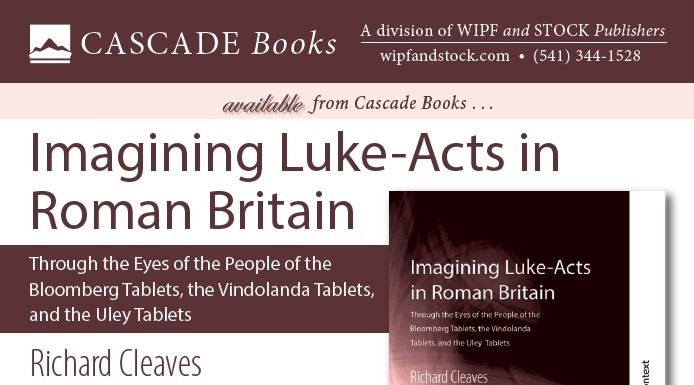
Imagining Luke-Acts in Roman Britain by Richard Cleaves is published by Cascade Books in their Matrix series: the Bible in Mediterranean Context. With the conquest of Britain beginning in 43 CE, the Mediterranean world of the Roman Empire arrived in Britain. It can be seen in the documents left by the traders, merchants and financiers of London's Bloomberg tablets, by the women as well as the men from the frontier fort of the Vindolanda tablets, and by the Uley tablets' women and men of a rural community who turned to their local temple for help in times of crisis. In these writings we glimpse the world of the New Testament. Each section of this website is linked to a chapter of the book and provides a guide to further reading and links to external resources should you want to explore this fascinating world further.
The book can be ordered from your local bookshop, or purchased online with a discount using the link below.
Publicity Flyer for Imagining Luke-Acts in Roman Britain (PDF)
Interview with Ian Paul for his Psephizo Blog
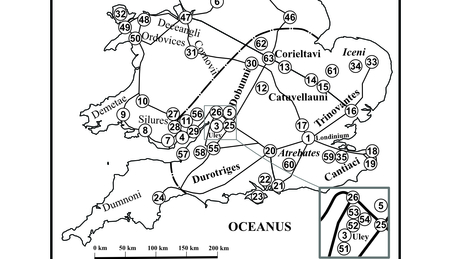
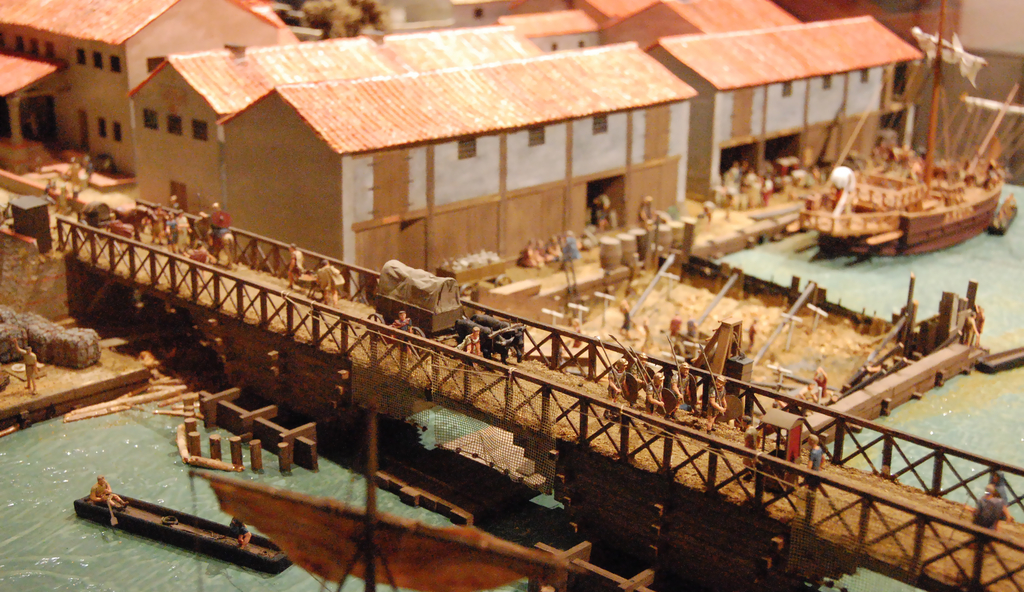
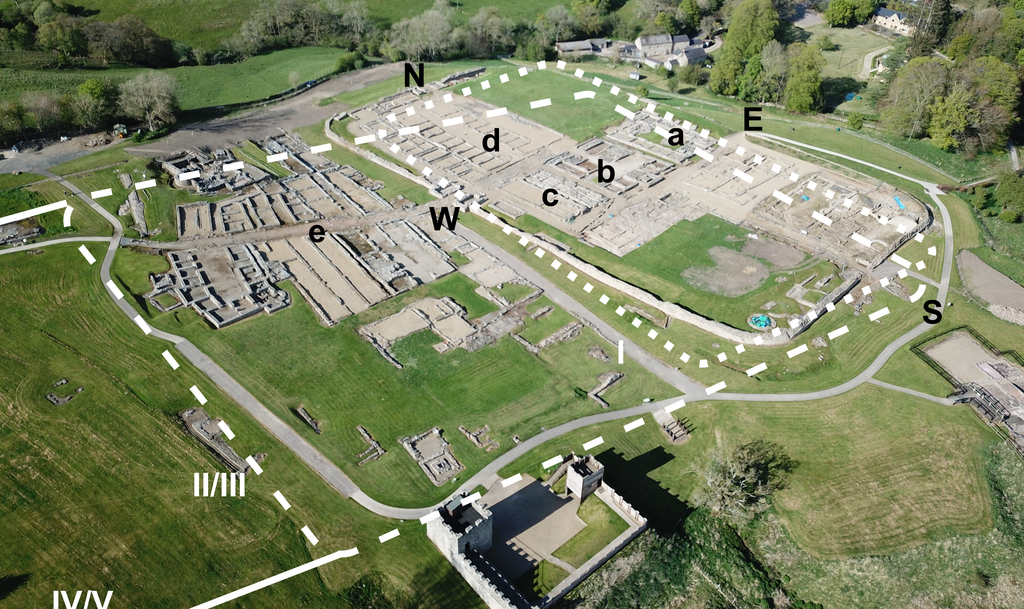
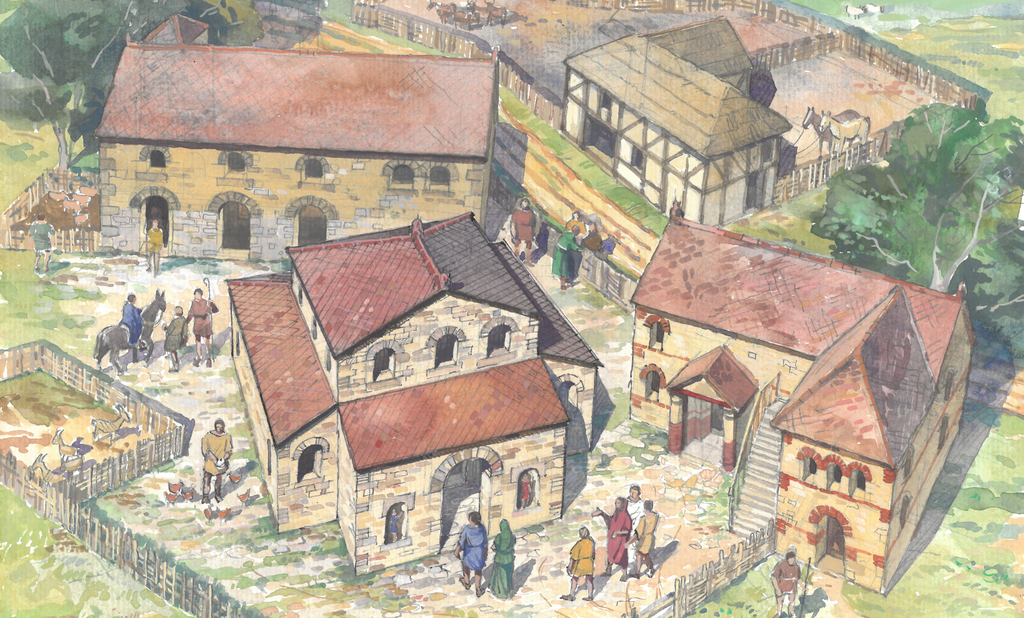
The discovery of handwritten documents from the ancient world, dating to New Testament times, is a rare event. Three such exciting discoveries have recently been made in Britain. In London's Bloomberg tablets (2016) we meet some of the Apostle Paul’s contemporaries as they arranged loans and drew up contracts. In the professional and personal correspondence of the Vindolanda tablets (1983–2019) we get to know the women and men of a frontier fort. In the prayer requests of the Uley tablets (2024) we meet people from a rural community who turned to their local temple in times of trouble.
Telling the story of the discovery of those three sets of tablets, Imagining Luke-Acts in Roman Britain by Richard Cleaves introduces us to the kind of people who appear in Luke-Acts and who were its first readers. We are invited to imagine how people such as these—merchants and traders; centurions and women of standing; ordinary farmers—might have understood Luke-Acts had they become followers of the Way of Jesus. Serving as a guide to the world of the New Testament in Roman Britain, it brings Luke-Acts to life in unexpected ways and throws new light on the way the first followers of Jesus negotiated the Empire.
“This book offers a stimulating and original way to explore the Roman world of Luke-Acts by way of recent archaeological finds in Roman Britain. Here the military community of Vindolanda, the traders and financiers of Roman London, and the rural community which produced the curse tablets of Uley—all brought to life by a disciplined archaeological imagination—provide windows into the lives and loves of Luke’s characters and original readers.”
—LOVEDAY ALEXANDER
Emeritus Professor of Biblical Studies, University of Sheffield
“In this remarkable book, Richard Cleaves shows—more clearly than anyone has before—the broad interconnections and parallels between the literacies of Roman Britain and those of the contemporaneous eastern Mediterranean. More than this, he maps the shared concerns, interests, anxieties, and habits that allow us to imagine the common ground across which religious communication and mutual understanding must have taken place in the first centuries AD.”
—GREG WOOLF
Leon Levy Director of the Institute for the Study of the Ancient World,
New York University
“Cleaves brings realism to an understanding of Luke-Acts by presenting first-hand, near-contemporary evidence of types of people, practices, and ideas seen in the biblical texts. The astonishingly preserved real people of Roman Britain bring new and illuminating depth to a reading of Luke-Acts.”
—PETER OAKES
Rylands Professor of Biblical Criticism and Exegesis, University of Manchester
“It only rarely happens that an interpreter conceives of a totally new and highly significant approach to a biblical text. Yet this is what Richard Cleaves has done with Imagining Luke-Acts in Roman Britain. In an academic setting where research into the beginnings of Christianity in the first century CE has been focused solely on the Mediterranean world, Cleaves has had the daring insight to ask, and to go a long way towards answering, how Britain might have featured in the process. . . . The result is not just a scholarly triumph, but a major contribution to bringing the British people into startling and unexpected conjunction with the dawn of Christianity.”
—PHILIP F. ESLER
Portland Chair in New Testament Studies, The University of Gloucestershire
30 June
Book Launch, Tabernacle Congregational Church, Pen-y-bont ar Ogwr
4 August
Interview with Ian Paul on his Blog, Psephizo, Roman Writing-Tablets and Reading Luke-Acts
24-26 August
British New Testament Society. A brief introduction to the book during the Acts seminar. With many thanks to Loveday Alexander and other members of the Acts Seminar for their feedback in recent years.
16 and 25 September
So that's what writing was like 2000 years ago!
Wednesday 16 September, 2-00 Porthcawl Library (in Welsh).
Friday 25 September, 11-00 Pencoed Library (in English)
So that's what writing was like 2000 years ago
Tuesday 28 September
Workshop introducing Imagining Luke-Acts in Roman Britain at the Congregational Federation's Ministers' Retreat.
Thursday 19 November 7-00 at Highbury Congregational Church, Cheltenham An introduction to Imagining Luke-Acts in Roman Britain.
May 2027
date to be confirmed
Annual lecture of the International Centre for Biblical Interpretation, University of Gloucestershire.